It’s 2 in the morning. You’ve turned over for the tenth time. The sheet clings to your skin. The pillow is warm on both sides. The air is completely still. And sleep remains stubbornly out of reach.
As heatwaves become more frequent and intense, summer nights have turned into a real challenge. Our body needs to lower its core temperature by around 0.5 to 1 °C for the brain to finally “let go” and trigger the first phases of deep sleep. When the ambient heat prevents this, the entire balance of the night, and of the day that follows, is thrown off.
At Elite, artisans of sleep since 1895, we watch over your nights even when conditions are at their most unfavourable. Here is our complete guide to finding restful sleep, even during a heatwave.
Why heat sabotages your sleep
Your body is a thermostat of remarkable precision. Every evening, it triggers an internal cooling process that sends a vital signal to the brain. But this mechanism is put under severe strain during heatwaves.
Above 18–19 °C in the bedroom, deep slow-wave sleep and REM phases begin to fragment. The brain stays on alert, micro-awakenings multiply, and physical and mental recovery is compromised. Repeated over several nights, what specialists call “tropical nights”, these disruptions have measurable consequences on health, the immune system and mood.
The good news? There are concrete solutions, both in your daily habits and in the quality of your bedding. And contrary to what many people think, that is precisely where it all begins.
Habits and rituals: sleeping well despite the heat
Managing the temperature in your bedroom
The most powerful lever for keeping a comfortable temperature in your bedroom is the passive thermal management of your space.
During the day: shut everything out. As soon as the outside temperature exceeds the indoor temperature, close windows, shutters and blinds. Your bedroom must become a protective cocoon of darkness, an active defence against the heat trying to seep in.
At night: sweet relief. As soon as the outside air cools down (often after 10 pm), open everything wide to create cross-ventilation. This is when the house can finally breathe. Important exception: on tropical nights, when the outside temperature does not drop below 20 °C, do not open the windows; the warm incoming air would only make things worse.
Place a damp cloth in front of a slightly open window on the shaded side: evaporation actively cools the room’s atmosphere. If you have a fan, point it towards the ceiling rather than directly at you: a continuous airflow on the face dries out the sinuses and disrupts nocturnal breathing. Place a bowl of ice cubes in front of it to amplify the cooling effect.
Preparing the body for sleep
The goal is not to seek absolute cold. The body reacts poorly to extremes; let us aim for the right regulation.
The cold shower trap
This is the most common mistake, and one of the most counterproductive. A cold shower triggers a thermal shock: the body immediately defends itself by constricting blood vessels (vasoconstriction) and producing heat to warm back up. Sleep specialists are unanimous: opt for a lukewarm shower, taken 60 to 90 minutes before going to sleep. It activates vasodilation, opens the pores and leaves a lasting sensation of freshness upon stepping out, accompanied by a natural lowering of the core temperature: exactly the signal the brain needs to trigger sleep onset.
The pulse point trick
Recommended by sleep physicians, this technique is both simple and remarkably effective. Just before sliding under the sheets, apply very cold water or a slightly damp face cloth cooled in the freezer to your wrists, temples, inner elbows and neck for 2 to 3 minutes. These are the areas where blood vessels lie closest to the skin’s surface. By cooling the blood circulating there, you effectively lower your core body temperature without any thermal shock.
Sleeping naked: a tempting mistake
The temptation is understandable, but perspiration then sits unabsorbed on the skin, creating an uncomfortable effect and disrupting thermal regulation. Experts instead recommend wearing ultra-lightweight pyjamas in cotton, linen or silk: the fabric absorbs moisture, creates an airy micro-climate around the body and allows heat to escape gradually.

Food and drinks before bedtime
What you eat or drink in the evening directly influences your body temperature.
Eat light, eat cool. Set aside red meat and heavy meals. These foods trigger thermogenesis, heat production through digestion, at the very moment your body is trying to cool down. Opt instead for lightness and freshness: gazpacho, fish tartare, water-rich fruits such as watermelon or melon.
Sensible hydration. Drink regularly throughout the day without waiting until you’re thirsty. In the evening, keep a carafe of fresh (not iced) water on your bedside table; drinking very cold water at night can abruptly wake the digestive system. Alcohol at dinner, the false friend of sleep, is particularly to be avoided: after a deceptively sedative initial effect, its breakdown generates an internal heat surge and increases nocturnal perspiration. Avoid caffeine and black tea after 2 pm: both are diuretics and stimulants that compromise deep sleep cycles.
The real solution starts with your bed
Evening rituals are essential. But if they are not enough, it is time to look at what you are sleeping on.
Natural materials, the guardians of your freshness
There is a reason our craftsmen in Aubonne have worked exclusively with natural materials since 1895: no synthetic fibre can match their thermal and hygroscopic properties. Only natural fillings can evacuate excess heat and moisture to create a healthy, dry sleep environment.
Tussah silk, which forms the summer side of several of our mattresses, absorbs up to 30% of its weight in water without generating any sensation of dampness, and actively disperses body heat, with a refreshing effect from the very first moments of contact. Horsehair ensures natural cross-ventilation and neutralises perspiration.
Swiss sheep’s wool also absorbs up to a third of its weight in water without creating any sensation of moisture, a precious advantage given that we lose around 0.5 litres of water through perspiration each night. On some of our models, camel hair, lightweight and hypoallergenic, completes this ensemble by maintaining a constant body temperature and actively protecting against overheating.
To these noble materials are added organic cotton (freshness, breathability, hypoallergenic softness), SeaCell® fibre with antibacterial properties, and the plant-based fibres Lyocell, Ingeo and soy, which absorb moisture and regulate body temperature night after night.
Have you thought about flipping your mattress?
Most Elite mattresses have a summer side and a winter side, differentiated in their composition. The summer side brings together refreshing materials such as Tussah silk. The winter side features cashmere for a warm, enveloping night’s rest.
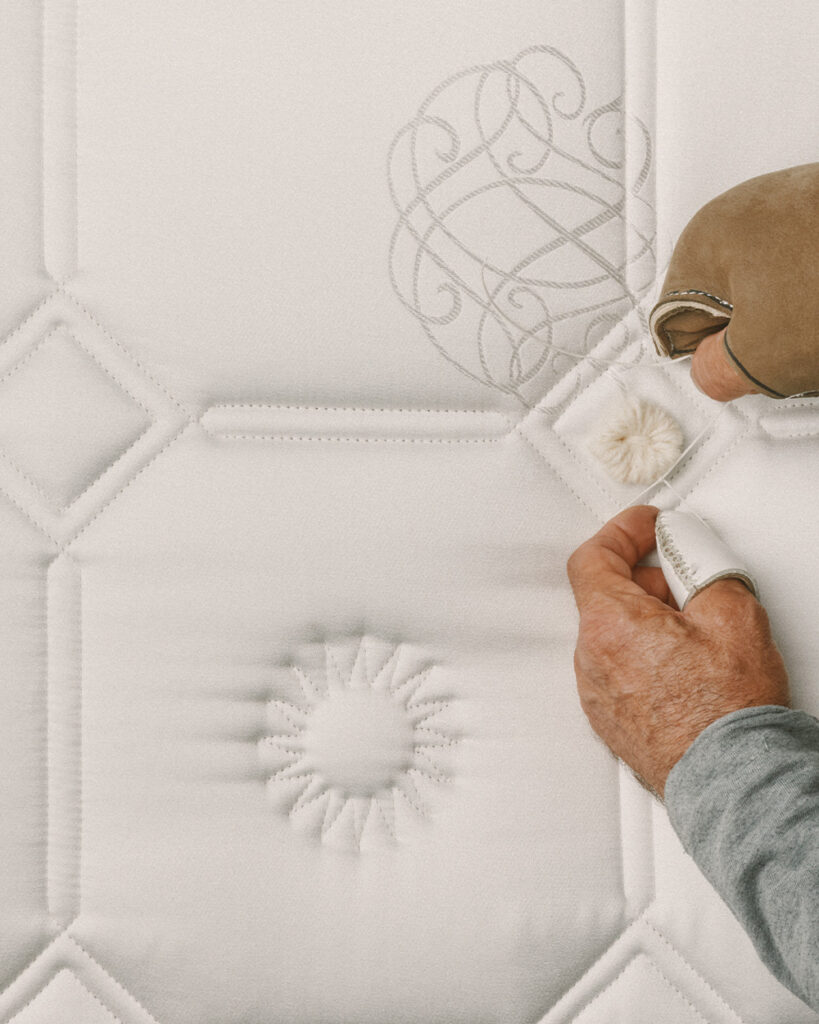
If you haven’t yet flipped your mattress, now is the time. Our craftsmen recommend doing this in April to activate the summer side, and in October to rediscover winter warmth. A simple gesture that immediately transforms the sleep climate of your night.
Pocket springs: when the structure makes all the difference
A foam mattress, however high-performing, has a limitation in summer: foam insulates and traps body heat instead of dissipating it. Its closed structure does not allow air to circulate freely.
Elite pocket spring mattresses work on a radically different principle. Each spring, enclosed in its cotton pocket, responds independently while allowing air to flow freely through the core of the mattress. This cross-ventilation is irreplaceable for sleepers who are sensitive to heat.
Your bedlinen: the last line of defence
Set aside the polyester and heavy cottons. In summer, the fabric of your sheets is in direct contact with your skin: the choice matters more than you might think.
Our Elite bedlinen collection offers the softest and most breathable materials for your summer nights:
- Linen: A natural thermoregulator, it stays cool to the touch, absorbs up to 20% of its weight in perspiration and softens with every wash. Its naturally anti-static structure prevents it from clinging to the skin.
- TENCEL™ Modal: Thanks to its natural microchannels, this cellulose fibre evacuates moisture up to 50% more efficiently than conventional cotton, with a remarkably soft hand feel.
- Hemp: Robust, breathable and naturally anti-dust-mite, it evacuates moisture efficiently and becomes softer with each wash.
- Silk: The queen of summer materials. Fibroin, a natural protein, regulates temperature. Hypoallergenic and ultra-lightweight, a silk cover transforms the bed surface into a cool, silky caress.
Duvet and pillow in warm weather
The same logic applies to your duvet. If you are among those sleepers who overheat, switching to a lightweight summer duvet or even a natural silk blanket is a decision that profoundly changes the quality of your nights.
Only natural materials and breathable technical fibres actively evacuate excess heat and moisture. A classic synthetic filling, however soft it may feel on the surface, creates a warm, humid micro-environment against the skin, a source of micro-awakenings, constant tossing and turning and that unpleasant clammy feeling.
Summer Silk Duvet: The benchmark for sleepers who overheat
A light and supple duvet, entirely filled with pure wild Tussah silk that absorbs up to 30% of its weight in moisture without generating any sensation of dampness, while actively dispersing heat for a naturally refreshing effect.
Royal Summer Duvet: The breathability of pure down
In its summer version, the Royal duvet is filled with white goose down in an ultra-fine Mako cotton cover. Available in spring, summer and combinable four-season versions, the Royal adapts to every thermal profile throughout the year.
Climat Luxe Duvet: Technical fibres
The Climat Luxe duvet incorporates Outlast® technology, originally developed for NASA: its microcapsules absorb the excess heat produced by the body, store it, and release it as soon as the temperature drops, continuously regulating thermal balance throughout the night. The Mako cotton cover with Aloe vera treatment ensures a soft, natural surface in contact with the skin.
The choice of pillow is equally strategic: dense synthetic foam retains heat at neck level, a frequent cause of micro-awakenings. Elite pillows with natural fillings breathe with you.
Royal Douillet Pillow (Soft / Medium / Firm)
Natural down and the Mako cotton cover absorb moisture far more effectively than any synthetic fibre: the neck stays dry and cool all night long. Three firmness levels allow a precise choice based on your body type: soft for back sleepers, firm for broader shoulders.
Climat Luxe Pillow
Like the Climat Luxe duvet, it is filled with Outlast® fibres that actively regulate heat at the level of the head and neck. No more flipping the pillow to find the cool side! 100% Mako cotton batiste cover with Aloe vera and Medicott® treatment: technical at its core, natural at the surface.
Summary: 10 heatwave tips for better sleep
- Close blinds and shutters during the day and ventilate only during the cool hours, with windows wide open to create cross-ventilation.
- Take a lukewarm shower 60–90 min before bed, never a cold one!
- Cool your pulse points (wrists, neck, elbows) just before getting into bed.
- Wear lightweight pyjamas. Sleeping naked leaves perspiration sitting on the skin.
- Eat lightly in the evening, without red meat or alcohol. Choose fresh, hydrating foods.
- Flip your Elite mattress to the summer side.
- Choose sheets in linen, TENCEL™, hemp or silk.
- Switch to a lightweight summer duvet or a natural silk blanket.
- Point the fan towards the ceiling with a bowl of ice cubes in front of it to diffuse a gentle coolness.
- Keep to your sleep schedule despite the heat: your circadian rhythm is your greatest ally.
Your trusted partner for every season
Heatwaves are temporary. But the quality of your sleep shapes every day that follows. For over a century, our craftsmen in Aubonne have been crafting mattresses designed to meet the most demanding needs.
If you feel too hot at night, if you wake up sweaty, restless and unrefreshed, your bedding may well be part of the reason.