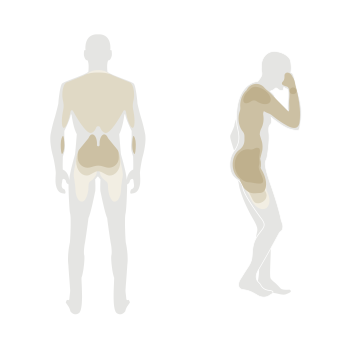
The effects of an incorrect rest position
Inadequate or suitable bedding can lead to painful conditions in the back and vertebrae.
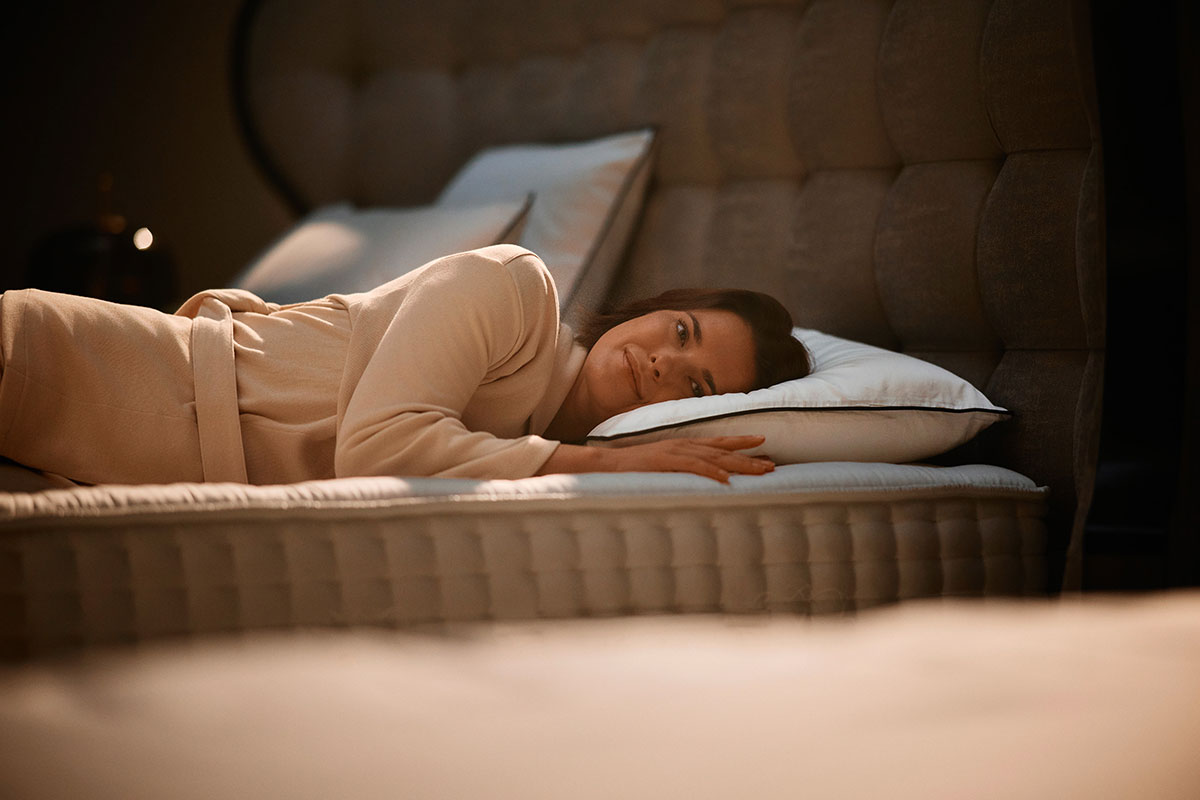
Failure to achieve complete relaxation delays and even prevents one from reaching deep sleep phases (paradoxical sleep) creating physiological shortfalls, psychophysical stress, a feeling of exhaustion, and impaired reactivity. Body conformation and the positions taken during rest are the main elements to take into account to achieve the optimal bed system, which will directly promote sleep quality and hence quality of life.
The morphological conformation (slender, short, obese, lean etc.) and positions taken during rest (mainly folded, on the back and on the side) directly determine the weight distribution of the extended body. These elements mean that standard proposals can be often ineffective or even have the opposite to the desired effects.
Compression of intervertebral discs
This results in painful conditions caused by compression of the intervertebral discs on the spinal nerves.
Compression of the vertebral column
Prevents relaxation of the muscular system which works in vain to correctly position the spine.
Compression of the lymphatic system
This results in compression of the vascular lymphatic system in contact areas.
The choice of firmness
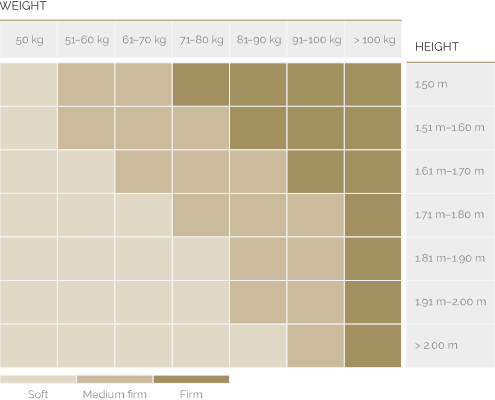
When choosing a mattress, there are some golden rules to go by. First of all, the ratio between height and body mass defines the weight per square centimetre: the higher this is, the more the mattress must be firm.
Then, if you sleep on your side, it is recommended you choose a softer multi-zone mattress to reduce pressure on the shoulders and the pelvis thus allowing better blood flow with the resulting cellular regeneration.
If you sleep on your back and you have a pronounced dorsal curvature, it is best to choose a mattress that will allow your pelvis to sink enough so that the lumbar support provided is sufficient.
Age is yet another component. Young people deal with a firmer support better. Over the years, the search for comfort develops and we begin to appreciate a softer layer.